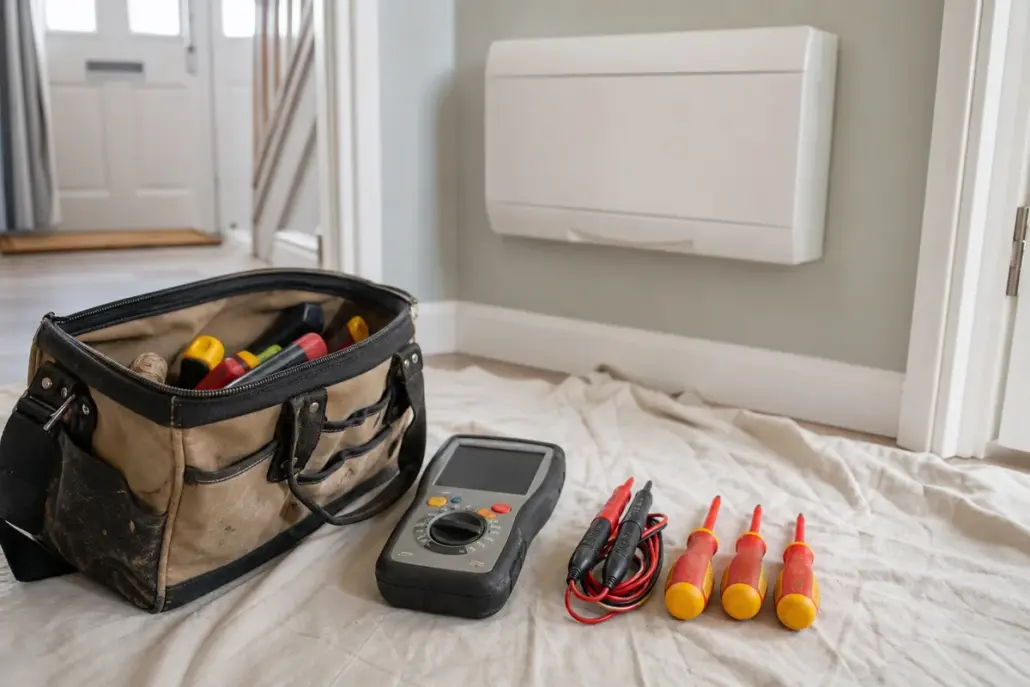
Metering work sits in an awkward spot for landlords. Some of it is genuinely yours to do. You can read the meters, keep the records, check the paperwork, and work out the bills. Some of it is trade work where regulation, certification, and liability all point firmly at hiring a professional, and in the case of gas, where the law restricts who may do the work at all. The line between the two is not obvious from the outside, and crossing it in the wrong direction ranges from an insurance headache to prosecution. This guide draws that line job by job, so you know what you can handle yourself and when to bring in a qualified contractor.
Who should install a sub-meter in a rental? For electricity, a qualified electrician working to BS 7671 (British Standard 7671, the IET Wiring Regulations). No statute reserves the job to an electrician, but Part P of the Building Regulations makes some jobs in dwellings notifiable in England and Wales, and an electrician on a competent person scheme is the practical route to compliant, certificated work. For gas work you commission as a landlord, a Gas Safe registered business, because the Gas Safety (Installation and Use) Regulations 1998 restrict who may work on gas fittings. For water, internal plumbing can legally be done by anyone competent, but the water industry’s WaterSafe register exists so you can hire someone who knows the Water Fittings Regulations. The supplier’s own meter is not yours to touch, which means any work on it goes through the supplier. Reading, record keeping, billing, and checking the meter itself is approved for billing all stay with you.
Key Takeaways
- The main supplier meter is not your asset. It is typically owned by the supplier or a meter asset provider, and installed and maintained by the supplier’s appointed meter operator. In electricity, that work happens under MOCOPA (the Meter Operation Code of Practice Agreement). If the meter is damaged or you suspect a fault, you report it, you do not touch it.
- Electricity sub-meters are electrician work in practice. BS 7671 is the recognised standard for showing the installation is safe, and some jobs, such as adding a new circuit or replacing a consumer unit, are notifiable under Part P of the Building Regulations in England and Wales.
- Gas work a landlord commissions must go to a Gas Safe registered business. The Gas Safety (Installation and Use) Regulations 1998 restrict work on gas fittings, and a landlord’s gas safety record from an unregistered person has no validity.
- Water sub-metering work on your own internal pipework is legal to do yourself, but a plumber from the WaterSafe register holds a recognised Water Fittings Regulations qualification, which protects you if the water company ever asks questions.
- In England, the Electrical Safety Standards in the Private Rented Sector Regulations 2020 require an EICR (Electrical Installation Condition Report) from a qualified and competent person at least every five years. Sub-metering work sits inside the installation that gets inspected, so poor or uncertificated work has a habit of surfacing there.
- Whoever you hire, check them on the public register for their trade before they start, and file the certificates they leave behind with your meter paperwork.
What metering work can you legally do yourself?
More than you might think, provided none of it involves altering an installation. Reading meters and photographing them for your records needs no qualification. Neither does checking a sub-meter’s markings and Declaration of Conformity to confirm it is approved for billing under MID (the Measuring Instruments Directive), which our MID approval checklist walks through. Working out charges under the Maximum Resale Price rules, issuing bills, and keeping the dispute file are all administrative work, and all yours.
The boundary arrives at physical work on the installation. Opening a consumer unit, running cable, wiring a meter into a circuit, breaking into gas pipework, or cutting into the rising main are all jobs where the compliance, certification, and safety consequences make hiring the norm, and in the case of gas fittings, where the regulations restrict who may do the work. Much of the liability for getting it wrong lands on you as the landlord, because the electrical safety, gas safety, and water fittings duties that matter in a rental all reach the person who controls the property or commissions the work.
Why is the supplier’s meter off limits?
The meter that measures what the property draws from the grid does not belong to you, even though it is on your wall. Ownership typically sits with the supplier or a meter asset provider that leases meters to suppliers, and the day-to-day work is done by the supplier’s appointed meter operator. In electricity, that work happens under MOCOPA (the Meter Operation Code of Practice Agreement), the agreement between meter operators and the distribution businesses that sets the safety, technical, and interface requirements for working on metering equipment.
For a landlord the practical rule is simple. Work on the supply meter is arranged through the supplier, not commissioned locally. If a tenant reports a cracked casing, a burning smell, or a display that has gone blank, your job is to report it to the supplier that day. Interfering with a supply meter, even with good intentions, can be treated as tampering. The service cable and the main fuse ahead of the meter are usually the network operator’s territory rather than the meter operator’s, and in some blocks a building network operator’s, so the same rule applies there. Identify who owns the asset and report the fault, do not touch it.
Who should install an electricity sub-meter?
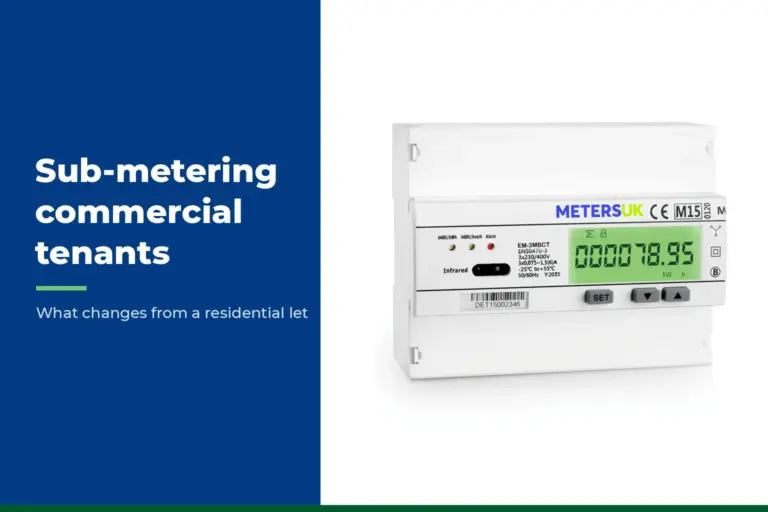
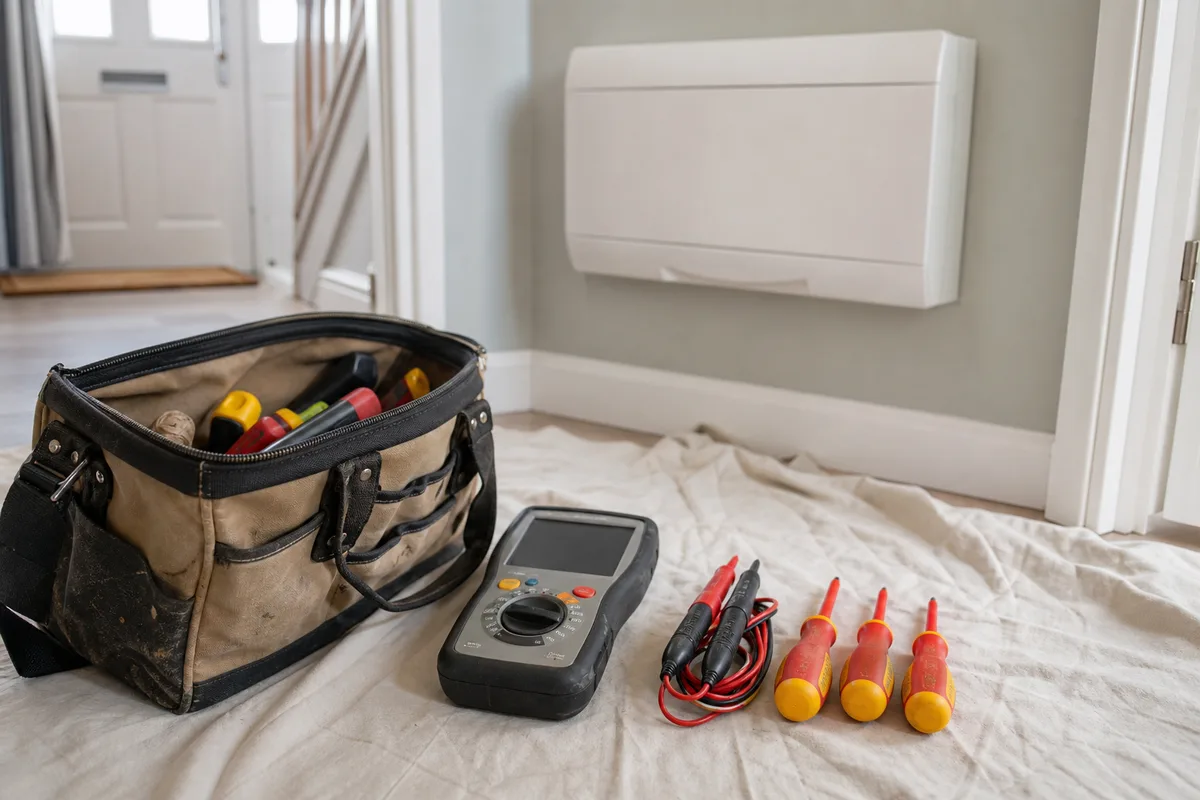
A qualified electrician, as a matter of practice if not statute. No law reserves sub-meter installation to a registered electrician, but every install involves working on live-capable circuits, and BS 7671, the IET Wiring Regulations, is the recognised standard for showing the finished job is safe. It is what Part P guidance points to and what the England rental electrical regulations inspect against. For a straightforward direct-connected sub-meter on an existing circuit, that is usually a short job. For CT (Current Transformer) metering on larger supplies, the sizing and wiring carry their own traps, which our CT metering guide covers, and experience with CT work is worth asking about specifically.
Part P of the Building Regulations adds a second layer in England and Wales. Certain jobs in dwellings are notifiable, including installing a new circuit, replacing a consumer unit, and certain work in the zones close to baths and showers. If your sub-metering plan involves a new circuit for each flat, the work either needs to be done by an electrician registered with a government-approved competent person scheme, who can self-certify compliance, notified to building control before it starts, or, in England, certified by a registered third party. An electrician on a competent person scheme handles the paperwork as part of the job, which is one of the better arguments for hiring one.
The meter itself matters as much as the person fitting it. If the sub-meter will be used to bill a tenant, it should be an approved meter under the Measuring Instruments Regulations 2016, shown by the MID (Measuring Instruments Directive) markings on the faceplate. Fitting an unapproved meter does not become legal because an electrician did the wiring.
What about gas, water and heat metering?
Gas carries the clearest rule in this whole area. Work on the gas pipework and fittings themselves, including tees for a gas sub-meter or moving pipework near the meter, is Gas Safe territory for anything a landlord commissions. The register is public, every registered engineer carries an ID card listing the work they are qualified for, and a landlord’s annual gas safety record has to come from a registered engineer anyway. Related wet work away from the gas itself, such as radiators and heating water pipes, is not restricted in the same way, which is exactly why checking what a job actually involves matters before deciding who can do it. In practice, gas sub-metering is rare in rentals precisely because the installation cost usually outweighs the billing benefit, which is why most landlords who split gas costs do it through heat metering instead.
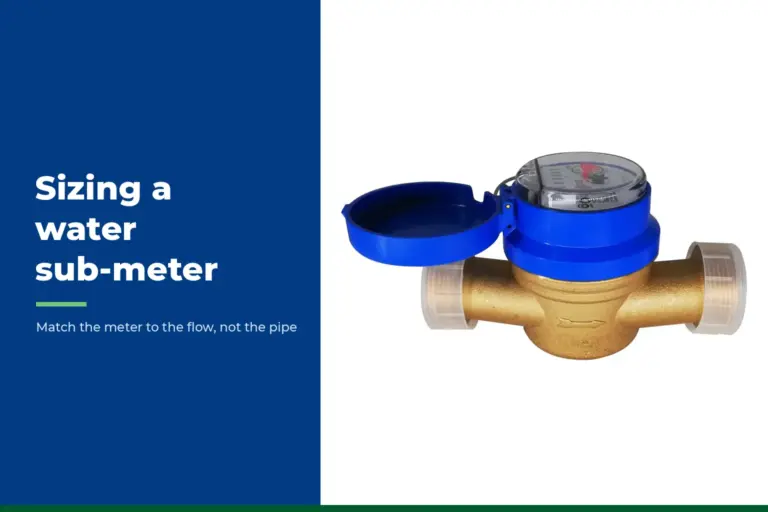
Water is more permissive on paper. You may legally work on your own internal pipework, and a competent landlord fitting a WRAS-approved (Water Regulations Approval Scheme) sub-meter on a straight run themselves is not breaking any law. The catch is the Water Supply (Water Fittings) Regulations, which make you responsible for every fitting complying. A plumber on the WaterSafe register, the water industry’s national register of approved contractors, holds a recognised Water Fittings Regulations qualification and can notify the water company where notification is needed. Our water sub-metering guide covers the metering side; for the installation itself, the register search takes a postcode and a minute.
Heat metering sits at the specialist end. Heat meters measure flow and temperature difference across a heat exchanger, the siting rules are less forgiving than electricity, and communal systems in Great Britain now fall under the Ofgem-regulated heat networks framework described in our heat network regulations guide. For anything beyond a single straightforward heat meter swap, you want an installer who works on heat networks routinely.
Which jobs need which contractor?
| Job | Who can do it | Why |
|---|---|---|
| Reading meters, billing, records, checking approval markings | You | Administrative work, no qualification required |
| The supplier’s meter, cutout or service cable | Arranged through the supplier; meter work by its meter operator, network equipment by the network operator | Not your assets; electricity meter work happens under MOCOPA |
| Electricity sub-meter on an existing circuit | Qualified electrician in practice | BS 7671 is the recognised standard the work is judged against |
| New circuits or consumer unit work for sub-metering | Electrician on a competent person scheme, building control notified, or third-party certified in England | Notifiable under Part P in England and Wales dwellings |
| Gas pipework or fittings work you commission | Gas Safe registered business | Gas Safety (Installation and Use) Regulations 1998 landlord duties |
| Water sub-meter on internal pipework | Legally you, sensibly a WaterSafe plumber | Water Fittings Regulations compliance is on you either way |
| Heat meters and communal heating work | Heat network specialist | Siting rules and the Ofgem heat networks framework |
How do you check a contractor is actually qualified?
Every trade in this list has a public register, and checking takes less time than reading a quote. Gas Safe engineers are on the Gas Safe Register, searchable by name or licence number, and the ID card shows which gas work each engineer is qualified for, so check the card covers pipework if that is the job. Electricians who can self-certify notifiable work appear on the registered competent person register run for the government-approved schemes. WaterSafe’s site searches approved plumbing businesses by postcode.
Registration is the floor, not the ceiling. Ask what certificate you will receive when the work is done. Expect an Electrical Installation Certificate or Minor Electrical Installation Works Certificate for electrical work, a Building Regulations compliance certificate where the job was notifiable, and the commissioning record for any billing meter. Then file them with the meter’s Declaration of Conformity. When a tenant disputes a bill or a deposit scheme asks questions, that folder is the difference between a five-minute reply and a bad month.
“The call we dread is the landlord who had a handyman wire four sub-meters into a new board to save a few hundred pounds. It works, nothing trips, everyone is happy for two years. Then the five-year EICR comes round, the inspector codes half the workmanship, asks for the certificates behind the new board, and there are none. The remedial bill is the original job three times over, plus the awkward conversation with the letting agent about the paperwork. Paying a scheme-registered electrician once is always cheaper than paying twice.” Meters UK technical team
Common Mistakes Landlords Make
The same hiring errors come up over and over in our support calls, and most of them cost real money to unwind.
- Letting a general handyman do electrical metering work. Competence at carpentry or plumbing says nothing about BS 7671. If the person cannot tell you which certificate they will issue at the end, they are the wrong person for this job.
- Assuming the electrician sorts the meter approval. Plenty of perfectly good electricians will fit whatever meter you hand them. Checking the MID markings before purchase is your job, and it takes two minutes.
- Touching the supplier’s equipment to tidy a metering install. Moving the supplier meter to make room, or pulling the main fuse to work dead, both belong to the supplier and the network operator. Book them; do not improvise.
- Treating water work as unregulated because doing it yourself is legal. The Water Fittings Regulations still apply, and non-compliant fittings are enforceable against the property owner. Legal to do yourself is not the same as consequence-free.
- Paying cash and skipping the paperwork. No certificate means no evidence at EICR time, at deposit disputes, at insurance claims, and at sale. The certificate is a large part of what you are paying for.
When is it time to stop and call a professional?
A simple test covers nearly every case. If the job changes the installation rather than observing it, hire for it. If you are still unsure, these steps keep you on the right side of the line.
- Write down exactly what the job involves. “Fit a sub-meter” often turns out to mean “add a circuit and a small board”, which changes who can do it.
- Match the job to the trade using the table above, and check the contractor on the relevant public register before accepting a quote.
- Confirm the meter being fitted carries the right approval markings for billing before anyone starts work.
- Ask what certificates the job will produce, and chase them if they have not arrived within a week of completion.
- File everything with your meter records, so the next EICR, dispute, or sale finds a clean paper trail.
Last updated: July 2026. Regulations current as of publication; this article is general guidance, not legal advice.