Water tends to be the forgotten utility in rental buildings. Electricity gets sub-meters because the bills are big and the disputes are loud. Water quietly gets bundled into the rent, split equally between flats, or absorbed entirely. That works until one tenant fills a hot tub weekly while another showers at the gym, and the fair-split assumption collapses. Sub-metering water is legal and governed by rules that are, in some ways, simpler than the electricity equivalent.
Can a landlord bill tenants for water through a sub-meter? Yes, for tenants occupying the property as their main home. In England and Wales the Water Resale Order 2006 governs what you can charge; Ofwat (the water regulator) sets and publishes the maximum-price rules, and an overcharged tenant enforces them through the courts. The core rule matches the electricity world. You cannot profit on resale. You can recover what the water company charges you, allocated by the methods the Order prescribes, plus a small administration allowance capped as a daily amount.
Last updated: June 2026. This article is general information on the rules as published by Ofwat, not legal advice.
Key Takeaways
- The Water Resale Order 2006 lets landlords in England and Wales recover water costs from tenants but bans profiting on the resale. Ofwat publishes the rules and the maximum-price calculations; overcharges are enforced through the courts.
- A small administration allowance is permitted on top of the recovered cost, capped by the Order as a daily amount (roughly £5 to £10 a year in practice depending on metering). Calculate it daily rather than treating the annual figures as a ceiling.
- A tenant who is overcharged can reclaim the excess, so keep the calculation trail clean.
- For billing, use a proper pulsed water sub-meter on each dwelling’s feed. WRAS (Water Regulations Approval Scheme) approval covers the fitting’s compliance with water regulations.
- Installation belongs with a competent plumber. The landlord’s job is meter selection, record keeping, and getting the charges right.
Can I charge tenants for water in the first place?
Yes, provided the tenancy agreement makes the tenant responsible for water and you follow the resale rules. Where the property has one supply from the water company and several lettings behind it, you are a water reseller in Ofwat’s terms, and the Water Resale Order 2006 applies to what you charge. The Order protects purchasers occupying the dwelling as their main home and supplied through a regulated water company; holiday lets, second homes, commercial occupiers, and private supplies sit outside it, so check the position separately for those.
The principle is cost pass-through. Whatever the water company charged you for the period is the pot you can recover, allocated across the tenants. Nothing extra goes on top apart from the administration allowance covered below. Ofwat’s guidance is explicit that a purchaser who has paid more than the permitted maximum can recover the difference from the reseller, with interest, through the courts if needed.
Scotland and Northern Ireland run different water regimes, so if your portfolio crosses borders, check the position for those properties separately rather than assuming the England and Wales rules travel.
What exactly can I include in the charge?
Your actual cost, allocated by the Order’s prescribed methods, plus a capped administration allowance. Where every dwelling is sub-metered, the Order’s approach is the clean one. Each tenant pays the same volumetric rate the reseller pays, with the standing charge divided equally between purchasers. Where some purchasers are unmetered, the Order prescribes a set of specific allocation methods rather than leaving it to judgement, so pick from those rather than inventing a formula.
On the administration side, the commonly quoted figures of around £5 a year for an unmetered purchaser and around £10 where a meter is read are rough annual equivalents of the Order’s actual cap, which is set as a daily amount (about 2.5p a day where the purchaser is metered). Because the statutory cap is daily, calculate it for the billing period rather than treating £10 as a safe annual ceiling, and check Ofwat’s current guide to water resale for the exact figures.
What you cannot do is round up per unit, load a margin into the rate, or charge a chunky “billing service fee”. If the numbers on the tenant’s statement cannot be traced back to the water company’s bill and the meter readings, the charge is on shaky ground.
Which water sub-meter should I fit?
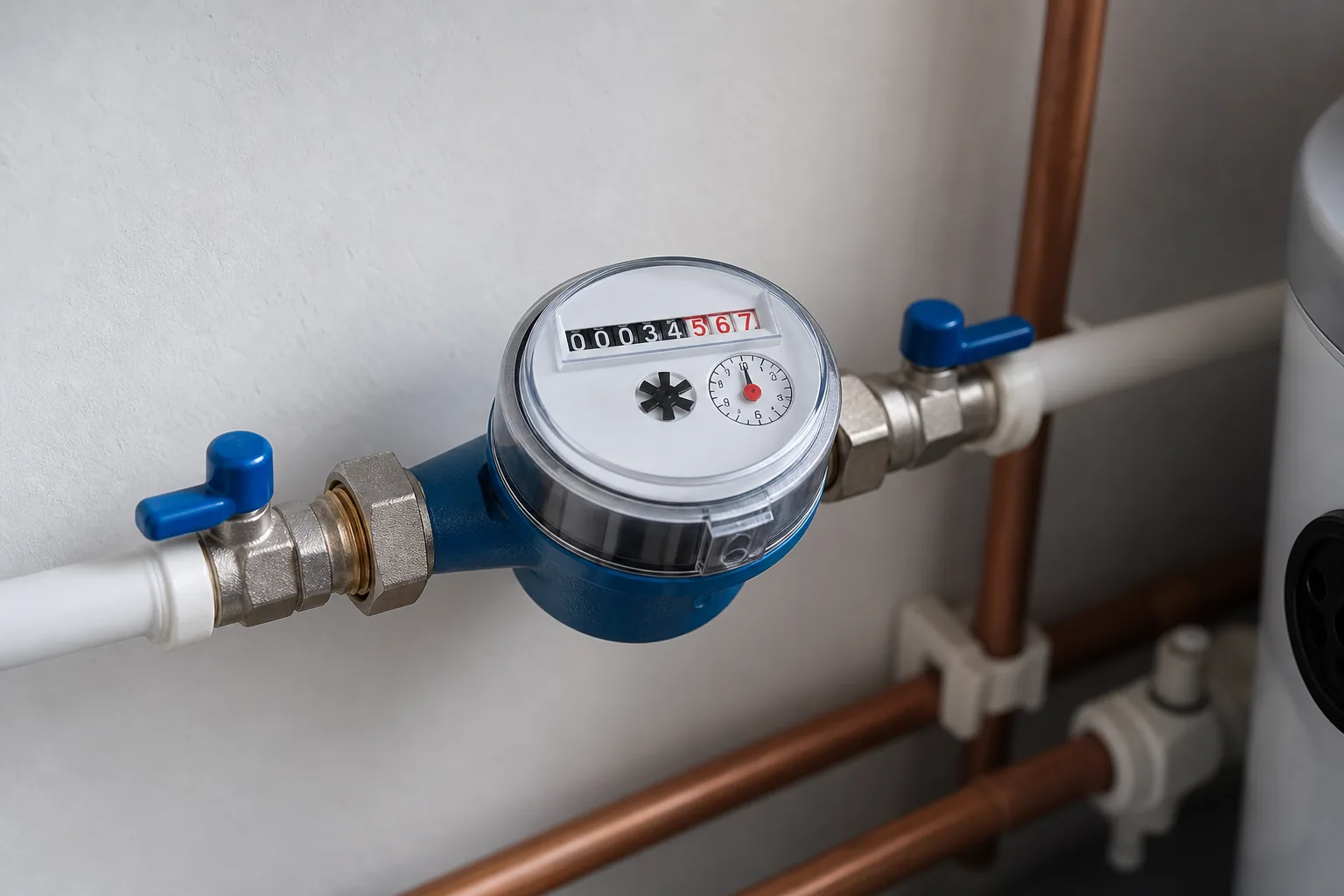
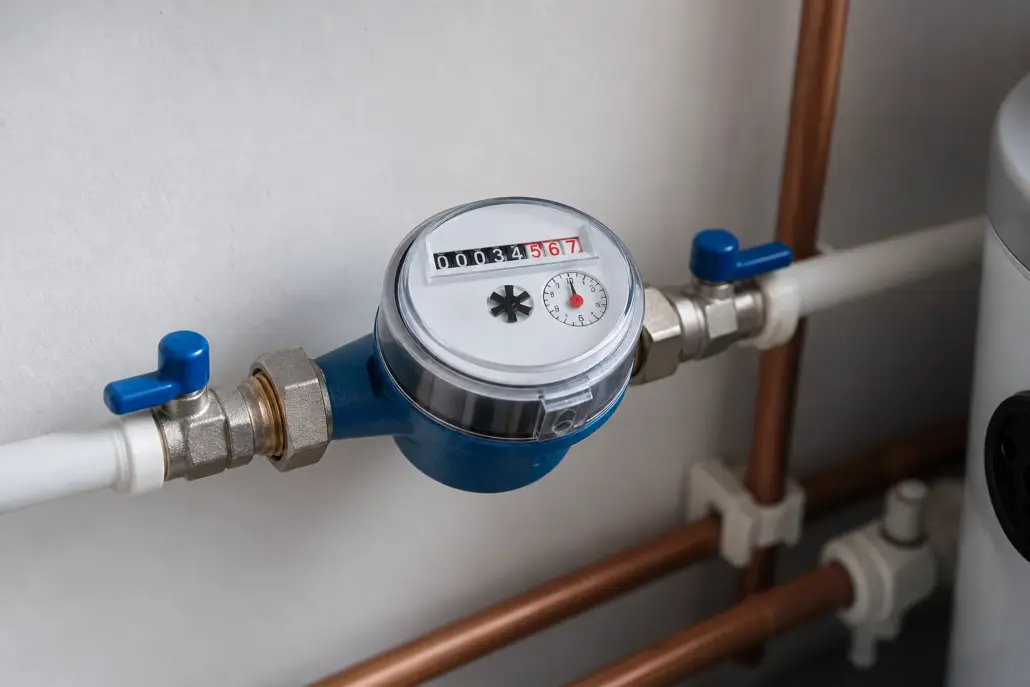
For landlord billing the practical choice is a pulsed multi-jet meter on the cold feed to each dwelling. The pulse output lets the meter join the same remote reading setup as your electricity and heat meters, so readings arrive without a torch-and-clipboard visit to the cupboard under the stairs.
A single-jet meter without a pulse output costs less and works fine where someone will read the dial manually. Turbine meters exist for high-flow commercial feeds and are rarely needed on residential lettings.
Two compliance points matter when buying. WRAS approval confirms the fitting complies with the water supply regulations, which is the baseline for anything plumbed into the supply. And where the meter is the basis of the bill, buy a billing-grade meter from a specialist supplier with the documentation to match, the same discipline covered in our MID (Measuring Instruments Directive) approval guide for electricity meters. Our water meter range covers pulsed and non-pulsed options.
Fitting the meter is a job for a competent plumber. Placement, isolation valves, and compliance with the water regulations sit with the person doing the installation, not with a blog post.
What about wastewater and sewerage charges?
Water company bills commonly include sewerage alongside the water supply, frequently calculated from the metered water volume. When you recover costs from tenants, the resale rules cover sewerage too. The total the water company charged you, including sewerage, is the recoverable pot. Keep the tenant statement itemised the same way the water company itemises yours, so the trail stays auditable.
Surface water and highway drainage are charged in different ways depending on the company: a standing charge, rateable value, a volumetric element, or site area. Pass through what your bill actually shows on a consistent basis rather than trying to meter it, because no sub-meter measures rainwater, and keep the allocation method the same from period to period.
Metered resale versus the alternatives
Sub-metering is one of several ways landlords handle water, and it is worth being honest about when the alternatives fit better.
| Approach | How it works | Where it fits | Watch out for |
|---|---|---|---|
| Included in rent | Landlord absorbs the bill, prices it into rent | Short lets, single lets, simple HMOs (Houses in Multiple Occupation) | Heavy users are subsidised by everyone else |
| Equal split of the bill | Total bill divided by number of units | Similar units with similar occupancy | Feels unfair fast when usage differs; disputes follow |
| Metered resale | Sub-meter per dwelling, charges follow actual use under the Water Resale Order 2006 | Multi-lets with varied usage, longer tenancies | Meter cost up front; readings and statements to manage |
“The sizing mistake is the one we correct most often on water jobs. People match the meter to the pipe diameter instead of the actual flow, and an oversized meter barely registers low flows, the dripping tap, the overnight cistern leak, the slow filler on a washing machine. The tenant’s bill comes out light, the landlord absorbs the gap, and nobody spots it for a year. Size the meter to the expected flow profile of the dwelling, not the pipework it happens to sit on, and it will register the low flows where a surprising amount of water actually goes.”
Meters UK technical team
Common Mistakes Landlords Make
Watch for the recurring errors on water sub-metering jobs.
Charging a marked-up rate per cubic metre. The resale rules are cost pass-through, the same discipline as the electricity Maximum Resale Price world covered in our MRP guide. A tenant who checks the water company’s published tariff against their statement will spot a margin instantly, and the Order lets them claim it back.
Forgetting the standing and drainage charges in the allocation. If the per-unit rate matches the water company but the fixed charges are silently doubled across units, the total recovered exceeds the bill, which breaches the no-profit rule just as surely as a marked-up rate.
Fitting a bargain meter with no pulse output, then discovering the remote reading platform cannot see it. If the rest of the building reports automatically, specify the water meters with pulse outputs from day one, as covered in our remote meter reading guide.
Skipping the paperwork. Keep the water company bills, the readings, and the allocation calculation together per billing period. The overcharge remedy in the Order means the burden lands on the landlord to show the numbers reconcile.
Where should a landlord start?
Check the tenancy agreements say the tenant pays for water and how. Then get a competent plumber to survey the feeds, because the practicality of sub-metering depends on each dwelling having a separable cold feed. Buildings with shared risers feeding multiple flats mid-run need more thought than a terraced conversion with clean per-flat feeds.
Specify pulsed, WRAS-approved billing-grade meters sized to the dwelling’s flow profile, and have the plumber fit them with access for reading and maintenance. Wire the pulse outputs into whatever reading setup the building already uses.
Set the tariff as pure pass-through from the water company’s bill, add nothing beyond the administration allowance in Ofwat’s guidance, and put the calculation on every statement. Boring bills are defensible bills.